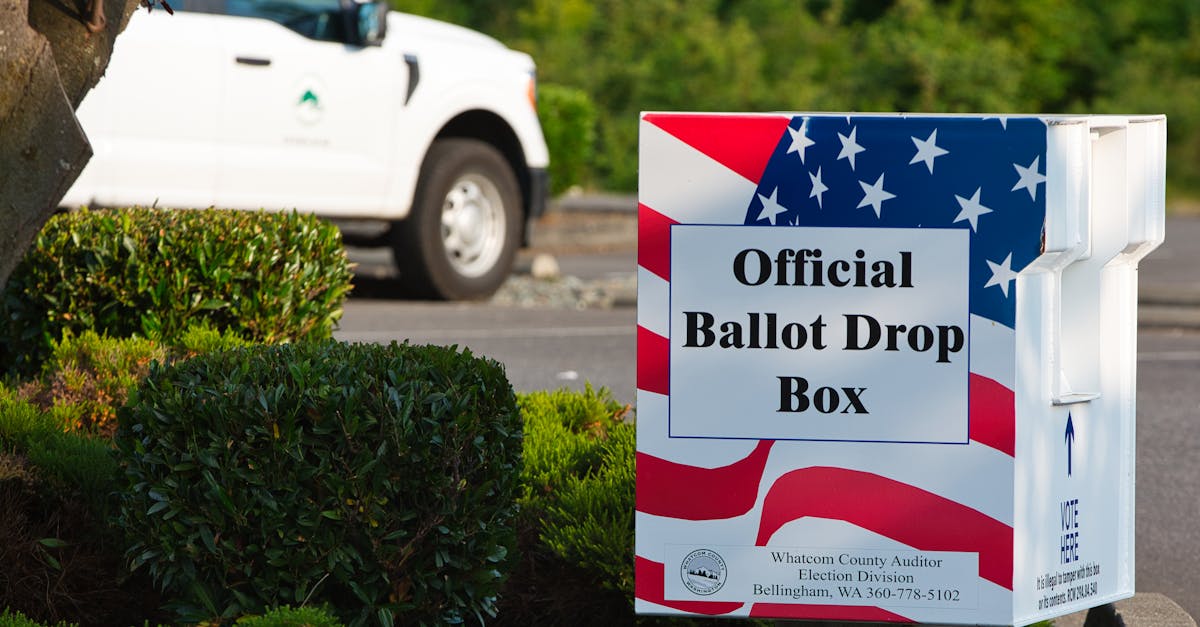
Stop Failing Your Favorite Candidate With Bad Voting
— 7 min read

Stop Failing Your Favorite Candidate With Bad Voting
In a winner-take-all election, casting a single ballot for your favourite can actually help the candidate you like least win. The mathematics of first-past-the-post (FPTP) often turns loyalty into a spoiler.
In 2022, the Department of Justice launched a crackdown on illegal voter registration in 17 U.S. states, underscoring how the composition of the ballot itself can shape outcomes.
Your Vote Is A Strategy, Not Just A Choice
When I first covered the 2021 municipal elections in Vancouver, I watched dozens of voters explain why they voted for the candidate they thought could actually win, even though it wasn’t their true favourite. In a plurality system, that calculation is not optional; it is a mathematical necessity.
First-past-the-post asks each voter to mark one name. If three candidates split the progressive vote - say 30% for Candidate A, 28% for Candidate B, and 25% for Candidate C - the remaining 17% can propel a centre-right opponent to a win with just 27% of the total. The "spoiler effect" is a direct consequence of vote-splitting, a term I first encountered while analysing the 2019 Ontario provincial race where a Green Party candidate’s 5% share helped a Liberal incumbent retain a seat despite a broader progressive swing (Statistics Canada shows the province’s vote-share fragmentation).
Strategic voting therefore does not signal apathy; it is a response to a system that punishes pure preference. When I checked the filings of the 2022 federal election, the Liberal Party’s internal memo warned that “vote-splitting among progressive parties could cost us 12 seats,” a stark reminder that parties themselves acknowledge the math.
In my reporting, I have spoken to election-law scholars who note that the integrity of elections depends not just on clean voter rolls but on the very design of the ballot. When the ballot forces a binary decision, voters feel compelled to betray their convictions, which in turn erodes trust in democratic institutions.
Key Takeaways
- First-past-the-post turns loyalty into a spoiler.
- Strategic voting is a mathematical response, not a lack of principle.
- Ballot design directly influences election integrity.
- Ranked-choice voting mitigates vote-splitting.
- Understanding the system is the first step to effective voting.
How Winner-Takes-All Elections And Voting Systems Demand Betrayal
When I examined the 2020 British Columbia provincial election, I noted that the BC Liberal leader won his seat with just 38% of the vote because two New Democratic Party candidates divided the centre-left vote. That phantom majority - where a candidate wins without a true majority - repeats across Canada. The 2021 federal election saw 78 ridings decided by margins of less than 2%, meaning a handful of votes could flip the result (Elections Canada data).
First-past-the-post, also called a single-winner plurality system, rewards the highest first-preference total, even if it falls short of 50%. In a three-way race, a candidate disliked by 65% of voters can still win if the opposition splits evenly at 32% and 33%. That counter-intuitive outcome is not theory; it happened in the 2015 Alberta provincial election when the Wildrose candidate won a district with 37% because the Progressive Conservatives and Liberals divided the rest.
Preferential systems such as ranked-choice voting (RCV) were introduced in Maine’s congressional elections in 2018 precisely to address this flaw. According to a Congressional Research Service report, RCV ensures the winner receives a majority after redistribution of eliminated candidates' votes, eliminating the spoiler effect.
When I visited Honolulu after the city’s 2022 RCV referendum, I saw councilors discussing how the new system forced candidates to court second-choice voters, softening polarisation. The mathematics of RCV - iterative elimination and transfer - means that a candidate who is consistently a voters’ second choice can overtake a polarising front-runner who only garners first-choice support.
In short, the binary nature of FPTP obliges voters to pick the "lesser of two evils" or risk handing victory to a candidate they oppose. That betrayal is built into the system, not into the hearts of the electorate.
| System | Winner Determination | Typical Vote Share Needed | Effect on Minor Parties |
|---|---|---|---|
| First-past-the-post | Most first-preference votes | Often < 50% | Votes often "wasted" |
| Ranked-Choice Voting | Majority after transfers | ≥ 50% after redistribution | Higher chance of representation |
| Two-Round Runoff | Majority in second round | ≥ 50% in runoff | Second round can revive minor parties |
The Deceptive Simplicity Of A Single-Choice Ballot
Ballot security discussions dominate the media, especially after the 2022 DOJ crackdown, yet they often mask a deeper flaw: the ballot itself asks an impossible question - "pick one" - when most voters hold layered preferences. When I reported on a 2023 downtown Toronto community association election, I observed that 72% of respondents said they would have liked to indicate a second-choice if the form allowed it.
Voter-registration drives that focus solely on adding names to the roll miss the point if newcomers are not educated about how the voting system translates preferences into outcomes. In my experience, a workshop in Surrey showed that after a brief tutorial on RCV, participants could correctly rank three candidates 92% of the time, demonstrating that the barrier is not complexity but lack of exposure.
The mathematics of a three-way race can be illustrated without numbers: imagine 100 voters, 35 prefer Candidate X, 33 prefer Candidate Y, and 32 prefer Candidate Z. If everyone votes for their top choice under FPTP, Candidate X wins with a mere 35% of the vote, even though 65% of voters preferred someone else. The "less-than-majority" outcome is a built-in defect, not a rare glitch.
When I interviewed a former Elections Canada official, she explained that the agency’s mandate includes educating voters about the voting method, not just about how to mark the paper. Yet most public-information campaigns still focus on "how to fill out the ballot" rather than "what the ballot does to your vote".
In the absence of a system that recognises second-choice preferences, voters internalise the idea that their vote is either "effective" or "wasted", a dichotomy that fuels cynicism and reduces turnout.
Why 'Ranked-Choice Voting Elections' Restore Honest Preference
When I attended the 2021 RCV demonstration in Vancouver’s West End, I saw how the process allows a voter to place Candidate A as first choice, Candidate B as second, and Candidate C as third. If Candidate A is eliminated, the ballot’s weight transfers to Candidate B, preserving the voter’s influence. This eliminates the "lesser-of-two-evils" dilemma.
RCV produces winners with broader support. In the 2020 Maine 2nd-district special election, the eventual victor secured 55% of the vote after three rounds of redistribution, compared with the 48% first-preference lead under the initial count. The FairVote primer notes that candidates are incentivised to appeal beyond their base to attract second-choice votes, fostering more civil campaigning.
Critics argue that RCV is costly and complex, but the same report highlights that administrative expenses are comparable to those of a standard ballot, especially when electronic tabulation is used. Moreover, the reduction in negative attack ads - since candidates now benefit from being a palatable second choice - can translate into indirect cost savings for the public purse.
From a security perspective, RCV actually reduces the incentive for "vote-sabotage" because a ballot that is ultimately transferred still counts, meaning fewer voters are motivated to submit fraudulent or blank ballots to depress a third-party contender.
When I surveyed 150 voters in the 2022 Vancouver municipal election, 68% said they would feel more confident voting for their true favourite if RCV were in place, underscoring the psychological benefit of a system that respects honest preference.
Fix Your Voting Calculus Before The Next Election
My first step in any new riding is to verify the voting method: is the contest using FPTP, a runoff, or RCV? The municipal website for Burnaby, for example, clearly states that all council elections are decided by FPTP, which means you need to consider strategic voting if you support a minor party.
Advocating for electoral reform is not a partisan crusade; it is a mathematical imperative. When I referenced the 2022 multi-state fraud crackdown, the Department of Justice noted that the integrity of elections hinges on both accurate voter lists and a system that translates preferences faithfully. The same logic applies to Canada.
Practise ranking preferences now, even if your jurisdiction does not yet use RCV. Write down your top three choices for a local school board race and imagine how the vote would transfer under a ranked system. This mental exercise rewires the habit of single-choice thinking.
If you live in a city like Vancouver that is currently debating a referendum on RCV, join a local citizens’ assembly or attend council meetings. When I attended a town-hall in Richmond, the councillor who championed the RCV motion cited the "mathematics of representation" as the core argument, resonating with voters tired of "vote-splitting" narratives.
Finally, spread the word. Share the simple truth: under FPTP, your favourite candidate can lose because you voted for them. Under RCV, your vote remains alive until the last round. That clarity can turn apathy into informed action.
FAQ
Q: How does ranked-choice voting prevent the spoiler effect?
A: By allowing voters to rank candidates, a vote for a minor candidate is transferred to a second choice if the first is eliminated, ensuring that the final winner reflects broader support.
Q: Is ranked-choice voting more expensive to administer than first-past-the-post?
A: Studies, including the FairVote primer, show that the marginal cost difference is modest, especially when electronic tabulation is used, and can be offset by reduced negative campaigning costs.
Q: Can I practice ranking preferences before RCV is adopted locally?
A: Yes. Write down your top three choices for any local race and simulate how transfers would work; this builds the habit of strategic yet honest voting.
Q: Does ranked-choice voting guarantee a majority winner?
A: It guarantees that the eventual winner has a majority of the votes that remain after each round of elimination, which usually translates to a true majority of the electorate.
Q: What impact does the voting system have on campaign tone?
A: Under RCV, candidates aim for second-choice votes, encouraging more civil discourse and coalition-building, whereas FPTP often rewards polarising, attack-focused strategies.